


|
 |
|
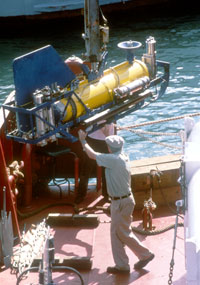
Deep-Tow’s
camera photographed telltale clamshells on the seafloor. (Photo courtesy of Peter Lonsdale, Scripps Institution of Oceanography)
|
|
 |
|
 |
|
|
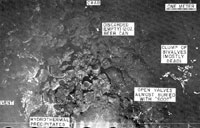
The clamshells were intriguing, but they were not proof of hydrothermal vents. At first, some scientists thought the clamshells (especially with a discarded beer can nearby) might be garbage thrown off a ship. (Photo courtesy of Peter Lonsdale, Scripps Institution of Oceanography) |
Frosted fractures and a pile of clamshells
Deep-Tow’s cameras also captured photos near a gaping seafloor fissure below the place where the temperature spike was measured. The photos showed rocks that seemed to be “frosted” with white and bright yellow deposits. At the time, it was difficult to conclude for sure that these were minerals precipitated from hydrothermal vents. They might have been meaningless white spots caused by chemical spills when the old black-and-white film was processed!
Deep-Tow also took photos of a pile of big, long, empty, white clamshells strewn on the seafloor (along with one beer can!) This, too, was curious. But it could have been garbage thrown overboard after a party aboard a ship. The scientists called the site “Clambake,” and marked the spot with transponders. Transponders transmit sound signals that scientists and deep-sea vehicles can home in on to determine their location. The transponders left behind by the Pleiades expedition would allow scientists on subsequent expeditions to find the site again.
 Page 1 Page 1 |
Astounding Undersea Discoveries 
|