INTRO | A CHANGED VIEW OF “LIFE” | NEW UNDERSTANDING OF EARTH
 |
 |
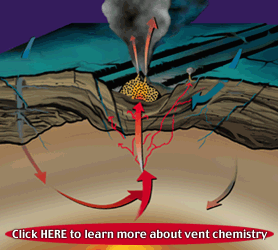
New Understanding of Earth The discovery of hydrothermal vents showed us a previously unknown way to change the chemistry of the oceans by adding and removing elements. (Illustration by E. Paul Oberlander, WHOI Graphics Services) |
Printable version of this article
People often say the ocean is eternal and unchanging—and, chemically speaking, that’s true. The chemical composition of seawater—that is, the kinds and relative amounts of chemical elements in it—hasn’t changed very much over millions of years. Scientists had figured this out, but they couldn’t figure out how this was possible. Every year, the world’s rivers dump millions of tons of elements dissolved from rocks and sediments into the oceans. How could the ocean’s chemistry stay the same?
The discovery of hydrothermal vents provided a way—which had never been thought of before—to remove some of these excess elements from the ocean. Hydrothermal vents also added some elements to the ocean.
Samples from the first vents discovered in 1977 showed that fluids coming out of the vents were very different from seawater. MIT’s John Edmond explained what happens: Seawater percolating into seafloor cracks is heated up by underlying magma or hot rock. This launches chemical reactions between the hot seawater and volcanic rocks in the ocean crust. The seawater gives up certain elements and takes in other elements from the rocks. After these exchanges, seawater is no longer seawater. It has chemically changed into hydrothermal fluid.
Edmond and colleagues showed, for example, that the vents remove elements such as magnesium and sulfur from seawater (which are put there by rivers). These elements get incorporated into seafloor crust. At the same time, the vents add to seawater some elements leached out of seafloor rocks.
Scientists estimate that the entire volume of the world’s oceans percolates through mid-ocean ridge hydrothermal vent systems every 10 million years or so. Hydrothermal circulation at mid-ocean ridges draws in seawater, rearranges the seawater’s chemical composition, and spews out chemically different fluids. The vents act as great chemical reactors that help regulate Earth's ocean chemistry.
 A Changed View of “Life” A Changed View of “Life” |
Page 2  |