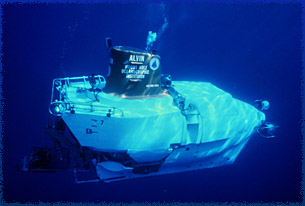

 Typically, three video and two 800-frame, 35-ram cameras are mounted on
Alvin’s exterior for either automatic or selective operation. Because there is no
light in the deep sea, the sub carries 12 lights to illuminate the bottom.
Two
hydraulic, robotic arms manipulate sampling and experimental gear specially
designed to work with their “hands.”
Typically, three video and two 800-frame, 35-ram cameras are mounted on
Alvin’s exterior for either automatic or selective operation. Because there is no
light in the deep sea, the sub carries 12 lights to illuminate the bottom.
Two
hydraulic, robotic arms manipulate sampling and experimental gear specially
designed to work with their “hands.”
A sample basket or sled mounted on the front of the sub carries a variety of instruments that includes sediment corers, temperature probes, water samplers, and a biological sample pump. Scientists using the sub can bring up to 1,000 pounds of their own gear.
Alvin is especially useful to such observational sciences as biology and geology, but marine chemists, physicists, and engineers are also among its users. The sub is probably most famous for locating a hydrogen bomb accidentally dropped into the Mediterranean Sea in 1966 (two years after the sub's delivery to Woods Hole), for its exploration of deep-sea hydrothermal vents discovered some two decades ago, and for its survey of the sunken ocean liner Titanic.
| Alvin Dive Statistics, 1964-1999 | |
| Total Dives | 3,515 |
| Total Depth | 7,224,392 meters |
| Average Depth per Dive | 2,055 meters |
| Total Time Submerged | 24,068 hours |
| Average Time Submerged per Dive | 6.85 hours |
| Total Persons Carried | 10,540 |
| Dive Purpose Breakout | |
| Geology/Geophysics | 1,285 |
| Biology | 1,240 |
| Chemistry/Geochemistry | 389 |
| Certification/INSURV | 245 |
| Inspection/Search/Recovery | 171 |
| Engineering/Equip Tests | 84 |
| Orientation | 74 |
| Navy Test/Survey | 27 |
